India’s smartphone market is worth fighting for. With over 700 million active users and a deeply rooted desire to break free from Chinese tech dominance, the timing for a genuinely “Made in India” smartphone brand seemed absolutely perfect. Then came AI Plus — a brand that promised everything Indian consumers had been waiting for. Privacy. Sovereignty. Security. Locally built technology.
Except things didn’t quite pan out that way.
What followed was one of the most dramatic, legally charged, and frankly alarming controversies the Indian tech community has ever witnessed — involving fake reviews, hidden Chinese apps, silenced YouTubers, and a Delhi High Court injunction that sent shockwaves across the content creator world.
Here’s the full story.
Why India Desperately Needed a “Made in India” Smartphone Brand
To understand why AI Plus managed to generate so much buzz at launch, you need to appreciate just how large a gap exists in the Indian smartphone market.
Two-thirds of all smartphones sold in India come from Chinese brands — Xiaomi, Vivo, OPPO, and others. These aren’t just popular; they dominate. For a country that shares a complicated, tension-filled border with China — marked by repeated military standoffs and a deep-rooted lack of trust — this creates more than just an economic concern. It raises genuine questions about data security and national sovereignty.
Previous Indian brands had tried to fill this void. Names like Carbon, Micromax, and Lava all leaned heavily into nationalist marketing, plastering “Made in India” across their campaigns. But they failed to capture meaningful market share for a simple reason: their phones were assembled in India but designed in China. And if you’re getting a China-designed phone regardless, most consumers naturally go straight to the cheaper Chinese source.
That created a real, unfilled opportunity — one that AI Plus seemed perfectly positioned to seize.
Who Is AI Plus — And Who Is Behind It?
AI Plus launched in July 2025 with a bold pitch: India’s first fully sovereign smartphone. Not just assembled locally, but genuinely imagined, engineered, and built on Indian soil — with user data stored exclusively within India.
Their messaging was relentless about it. The boot screen of their devices literally displayed the phrase “Your data stays safe in India.” Their marketing videos claimed their phones were “certified for government use.” The CEO publicly attacked rival brands, saying “Made in India means little if software and updates come from abroad” — and criticized the prevalence of Chinese phones as a critical threat to consumer data privacy.
On paper, there is arguably no one better qualified to launch an Indian smartphone company. The prices were also reasonable — the Pulse (4G) started at ₹4,499 and the Nova (5G) at ₹7,499, equivalent to roughly $47 and $79 at the time.
So what went wrong?
The First Cracks: Chinese Apps on an “Indian” Phone
The controversy began when a tech YouTuber named Gyan Therapy picked up an AI Plus device and started digging. What he found raised immediate red flags.
The Operating System Looks Familiar
AI Plus’s custom Android skin — branded Next Quantum OS — bore a striking visual resemblance to Realme’s operating system. That’s notable because Realme is one of the brands Madhav Sheth used to run, and their OS is very much a China-developed product. Building a brand-new Android skin from scratch and having it closely resemble a competing Chinese platform is, at minimum, a curious design decision.
Three Pre-Installed Apps That Can’t Be Removed
More damaging was the discovery of three pre-loaded applications on the device:
- Clean Assistant
- Phone Clone
- Mobile Butler (later renamed Phone Manager in subsequent builds)
These apps couldn’t be disabled or uninstalled by users. And when Gyan Therapy investigated further, he found that the privacy policy for Phone Clone pointed directly to Sprocom Technologies — a China-based company — as the service provider.
The policy itself was notably broad in its data collection scope, covering information provided directly by users, data gathered automatically during app usage, and data pulled from third-party sources. For a phone marketed on the explicit promise that your data never leaves India, this was a serious contradiction.
An independent Android researcher who analyzed the extracted app files concluded that all three applications were built in China and had simply been repackaged with new names to appear as native components of Next Quantum OS.
The Response? A Legal Notice.
Rather than addressing Gyan Therapy’s findings publicly or transparently, AI Plus sent him a legal notice and had his video geo-locked in India. Viewers outside the country could still watch it. Indians could not.
This would turn out to be only the beginning.
Who Is Sprocom Technologies — And Why Does It Matter?
Investigating Sprocom Technologies revealed something even more significant than a few pre-installed apps.
Sprocom is a Chinese ODM — Original Design Manufacturer. This is a business model worth understanding clearly:
| Approach | Who Designs It? | Who Manufactures It? | Who Owns IP? |
|---|---|---|---|
| In-house design (e.g., Apple) | The brand | Contract manufacturer | The brand |
| ODM model | The ODM | The ODM | Usually the ODM |
When a company uses an ODM, they’re essentially selecting from a catalogue of existing designs, requesting minor customizations (a different color, a tweaked camera placement, their own logo), and reselling the result under their own brand. The “imagination” and engineering happen almost entirely on the ODM’s side.
A visual comparison of Sprocom’s own product line against the AI Plus Pulse phones revealed nearly identical hardware — same camera module placement, same side profiles, remarkably similar specifications including display size and internals.
According to an insider with deep knowledge of the Indian smartphone supply chain, Sprocom sits firmly in the low-tier ODM category:
“There is no R&D involved. The product exists. What you do is just customize slightly the back of the phone so it looks a bit different.”
Even more concerning, this source explained that low-tier ODMs like Sprocom are known for cutting costs through one particularly troubling method: used or refurbished memory chips. A new-looking phone might contain second-hand storage components bought at a fraction of the cost of genuine new parts — without the buyer ever knowing.
To put a number on it: a 64GB used memory chip might cost as little as $20, versus $60 for a new one.
This creates a double problem for AI Plus customers. Not only is the phone arguably less “Indian” than marketed — it may also be a lower-quality product than the Chinese phones AI Plus was criticizing.
Wave Two: The Controversy Explodes
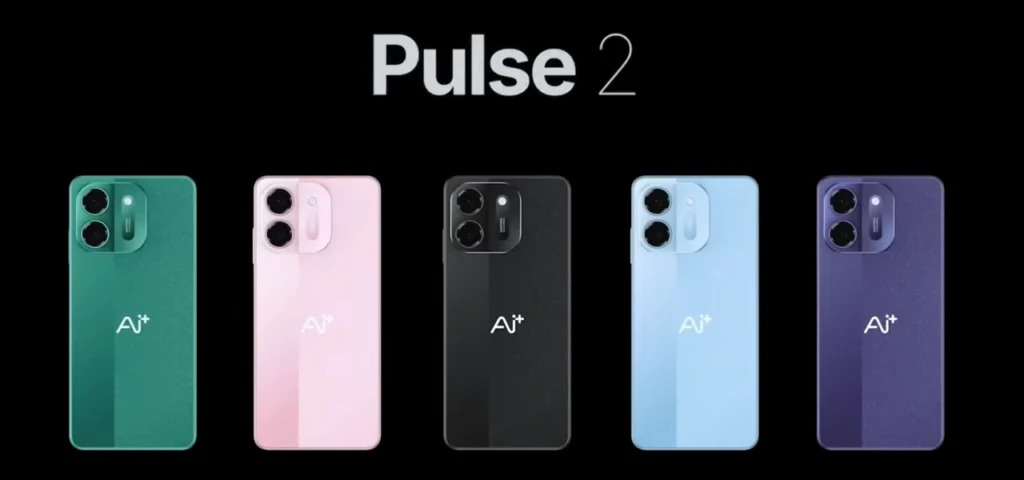
By 2026, AI Plus had launched a second generation of products including the Pulse 2 and a new flip phone called the Nova Flip. This time, the YouTube tech community was ready.
“This Indian Phone Is a Marketing Disaster”
A channel called Techweiser published a video with that title, making two key accusations:
1. Bloatware still exists. The CEO had publicly boasted about his phones being “first and foremost, bloatware-free.” Yet Techweiser found a Game Space Hub pre-loaded with spammy, ad-filled games taking up storage space — hidden from the app drawer but still very much present. Invisible doesn’t mean absent.
2. The Chinese apps never really left. The three Sprocom-linked apps from the first generation were still present on the Pulse 2. Two had been hidden from view, but connecting the device to a laptop and running a simple ADB command revealed them immediately. The apps hadn’t been removed — they’d just been concealed.
Techweiser’s video was taken down completely within days.
The Nova Flip Is a ZTE Phone in Disguise
A second channel, Techbar, published an even more explosive expose. Their claim: AI Plus’s Nova Flip was not an Indian innovation — it was essentially the ZTE Nubia Flip 2 in different clothing.
This claim held up under close inspection. The devices shared the same battery capacity, processor, and camera system. More tellingly, digging into the firmware revealed ZTE identifiers stamped across dozens of system components — the compass app, the AI engine, the fingerprint service, and 20 to 30 or more system-level permissions all carrying ZTE labels.
ZTE was not mentioned once during the AI Plus launch event.
Techbar also noted that the pattern wasn’t limited to the flip phone. Their position: look into any AI Plus product and you’ll find a Chinese equivalent. In a few minutes of searching, they found that the brand’s child smartwatch linked to an app from Lee Fine Technology — a Shenzhen, China-based company — and that AI Plus’s Wearbuds product was nearly identical to an existing product from a Chinese company called AI Power.
What made this particularly strange was that AI Power’s verified Instagram account had itself posted about the AI Plus launch event with the caption: “Great cooperation with AI Plus brand.” If the Wearbuds had been independently designed and patented in India, why would a Chinese manufacturer publicly take credit for a collaboration?
And then there was the logo overlap — the “AI” graphic from AI Plus placed directly over the “AI” from AI Power matched almost perfectly.
Both Videos Removed. A Court Order Issued.
Fourteen days after these videos were published, the Delhi High Court granted AI Plus an ex-parte injunction against Techweiser, Techbar, and an unnamed “John Doe” defendant — meaning any future critic could also be targeted.
An ex-parte proceeding is one where only one side presents its case. The other party isn’t heard.
According to legal experts, ex-parte orders are typically reserved for situations involving irreparable harm — domestic violence restraining orders being a common example. Using such a mechanism to silence tech reviewers is, by most legal standards, highly unusual. India’s defamation laws are notably more plaintiff-friendly than those in countries like the United States, where a true statement generally cannot be the basis for a successful defamation claim.
The John Doe clause extended the injunction’s reach to any unnamed future critics. Since the order was granted, legal notices have reportedly been sent to at least 10 other YouTube creators.
The Deliberate Design: How the Court Order Actually Worked
What made this situation particularly troubling wasn’t just that an injunction was sought — it was how it was obtained.
Techweiser’s lawyers revealed at their first hearing that AI Plus had used a specific strategy to ensure the YouTuber couldn’t defend themselves before the order was granted:
- John Doe was listed as the primary defendant. Because John Doe isn’t a real person, the court couldn’t require advance notice to be served. This bypassed the normal requirement that defendants be informed and given a chance to respond.
- The legal notice was sent to a non-existent email address. Even though AI Plus had used Techweiser’s real email address for brand correspondence as recently as two days before filing the suit, they sent the court order to an address the creator says doesn’t exist. This ensured Techweiser wouldn’t know about the case until it was too late.
The practical effect: the videos were suppressed during the most critical weeks of AI Plus’s product launch cycle. Even if the creators eventually win in court and their videos return, the damage to AI Plus’s competition had already been done.
As one lawyer put it: “By then the content would have been off during the critical juncture coinciding with the launch of their product.”
Confronting the CEO: What Madhav Sheth Actually Said
After reviewing all the evidence, a detailed on-camera interview with Madhav Sheth was conducted across multiple calls. His responses are worth examining closely.
On the Chinese Apps
When initially asked about the pre-installed Sprocom apps, Sheth said they existed only on global export versions for markets like Nepal, Sri Lanka, and Indonesia — not on Indian units.
When told the interviewer was holding an Indian-purchased device with all three apps present, Sheth pivoted — saying he needed to check the software version, that the version in question “has never existed” in any records he could find, and requesting that a new device be purchased to verify.
Three more devices were subsequently purchased in India — through separate sellers on both Flipkart and Amazon. Every single one had the Chinese apps installed on first boot.
On Bloatware
Asked directly whether Game Space and its pre-loaded games constituted bloatware, Sheth insisted the final launch software was clean. When shown evidence of customers on Flipkart posting screenshots of Game Space on their devices — including on second-generation phones — he repeatedly asked to verify the software version and suggested the phones in question might not be current.
On the ODM Reality
Sheth acknowledged that the original Pulse phone was “imagined in China” — a direct contradiction of launch marketing that promised a “confidently imagined in India” product. His reasoning: for basic 4G phones, existing design solutions are readily available, so the distinction between imagining it in China versus India “is one and the same thing.”
On ZTE
Sheth confirmed the Nova Flip is sourced from ZTE. His defense: the ZTE name appears on the box. A close inspection of the packaging reveals a small printed acknowledgment — but ZTE received zero mentions during the launch event itself.
On the Court Orders
In the first conversation, Sheth defended the injunction by saying the YouTubers hadn’t responded to his outreach and contained “unverified claims” without third-party audit validation. He argued that with tens of millions of dollars invested in the product launch, negative content without giving the brand a chance to respond was commercially devastating.
In a follow-up conversation — possibly influenced by the growing backlash — his position softened considerably. He said he had acted in haste, that he should have respected the creator community more, and indicated he was willing to reverse the court orders. He also deflected by blaming talent management agencies for “manipulating” the situation between the brand and creators.
The judge had a different view. When AI Plus’s arguments were presented, the judge’s response was direct: “We are not going to permit this. Let nobody be under the impression that they can pull wool over our eyes.”
Sheth was summoned to appear in court — and did not show up, pushing the next hearing to August 2026.
The Red Flags You Might Have Missed
Beyond the core controversy, several smaller details paint a fuller picture of how this brand operated:
- Five-star review manipulation. Every review on AI Plus’s official website was rated five stars — including what appeared to be customer support inquiries asking how to purchase the phone. Some reviews that contained clearly negative feedback still displayed five stars.
- Flipkart reviews with suspicious patterns. A cluster of Flipkart reviews followed nearly identical sentence structures: “The screen quality is great and the camera performs well” / “The display looks great and the camera is reliable” — suggesting possible mass-generated review activity.
- Terms and conditions written by AI. The company’s terms of service page ended with a prompt visible to users: “Let me know if you’d also like a downloadable version, a version for your Shopify website’s policy page, or tailored clauses for international customers.” An AI text generator had clearly been used and the output published without being proofread.
- Personal loan data collection language. Despite marketing campaigns warning about Chinese companies collecting financial data, an archived version of AI Plus’s privacy policy explicitly mentioned personal loan data — with consent to share information with credit bureaus via SMS, calls, and messaging apps.
- Photos supposedly taken on AI Plus phones. Marketing materials used images that multiple professional photographers assessed as technically implausible to have been captured on the hardware in question.
What This Means for Indian Consumers and the Creator Economy
This controversy sits at the intersection of two important issues.
Consumer Trust in “Made in India” Claims
The problem isn’t that AI Plus sourced components or designs from China — virtually every affordable smartphone brand on earth does so to some degree. The problem is the scale of the gap between what was promised and what was delivered. When a brand’s entire value proposition is built on sovereignty, privacy, and local manufacturing — when those claims are the reason consumers choose you over competitors — those claims need to hold up.
A phone with Chinese ODM hardware, Chinese pre-installed apps reporting back to Chinese servers, and a flagship product that is essentially a rebranded ZTE device does not meet that bar.
The Precedent for Tech Reviews and Free Expression
The legal tactics used here represent a genuine threat to the ecosystem of independent tech journalism. If a company with sufficient resources can obtain emergency court orders to silence negative coverage — during the exact window when that coverage matters most — without the critic ever getting a chance to respond, the chilling effect on honest reviews is enormous.
Smaller creators especially will think twice before publishing critical content about brands that demonstrate a willingness to pursue ex-parte injunctions aggressively. This ultimately harms consumers most, since independent reviews serve as one of the only reliable checks on misleading marketing.
Key Timeline of the AI Plus Controversy
| Date | Event |
|---|---|
| July 2025 | AI Plus launches with “Made in India” positioning |
| Late 2025 | Gyan Therapy publishes video exposing Chinese apps; receives legal notice; video geo-locked in India |
| Early 2026 | Techweiser publishes “Marketing Disaster” video |
| Early 2026 | Techbar publishes ZTE Nova Flip expose |
| ~14 days later | Delhi High Court grants ex-parte injunction; both videos removed |
| 2026 | John Doe clause used to pursue 10+ other creators |
| Mid-2026 | First court hearing; AI Plus’s tactics challenged; judge summons Sheth |
| August 2026 | Next hearing scheduled; videos remain offline |
Frequently Asked Questions
What is AI Plus and who founded it? AI Plus is an Indian smartphone brand founded by Madhav Sheth, the former CEO of Realme India. The brand launched in July 2025 with a core promise of sovereign, locally built smartphones with data stored exclusively within India.
Is the AI Plus Pulse actually made in India? The evidence suggests it is not — at least not in the sense the brand implies. The Pulse was confirmed by its own CEO to have been “imagined in China,” sourced from a Chinese ODM called Sprocom Technologies. Assembly may occur in India, but the design and much of the core technology originate in China.
What Chinese apps were found on AI Plus phones? Three pre-installed apps — Clean Assistant, Phone Clone, and Mobile Butler — were found to be linked to Sprocom Technologies, a Chinese company. These apps collected user data broadly and could not be disabled or uninstalled by users.
What is the Delhi High Court injunction about? AI Plus obtained an emergency court order preventing YouTubers Techweiser and Techbar from publishing negative content about the brand or its CEO, without giving those creators an opportunity to respond in court first. The order also extended to unnamed future critics via a “John Doe” provision.
What is an ex-parte injunction? An ex-parte legal proceeding is one in which only one party presents its case — the other party is absent, either because they weren’t notified or couldn’t attend. Critics of the AI Plus case argue that this mechanism was deliberately abused to silence reviewers during a critical product launch window.
Is the AI Plus Nova Flip the same as a ZTE phone? Yes. Madhav Sheth confirmed in an interview that the Nova Flip is sourced directly from ZTE. The device contains ZTE-labeled system components throughout its firmware, and its hardware matches the ZTE Nubia Flip 2. ZTE was not mentioned during the AI Plus launch event.
Has AI Plus reversed the court orders? As of mid-2026, the court orders remain in effect and the videos remain offline. Madhav Sheth stated in an interview that he intended to reverse the orders, but subsequently failed to appear at a court hearing where he was summoned to answer questions about the case.
Conclusion: A Cautionary Tale for India’s Tech Aspirations
The AI Plus story is not simply the story of a brand that overpromised and underdelivered — plenty of companies do that. What makes it genuinely alarming is the response when those gaps were pointed out.
Independent reviewers did their jobs. They bought phones, tested them, disclosed what they found, and published their conclusions. In response, a well-funded company used every available legal lever to erase that coverage from the internet, specifically during the weeks when it could influence buying decisions.
India absolutely deserves a world-class homegrown smartphone brand. The market opportunity is real. The consumer appetite is real. The national pride behind it is entirely legitimate. But building that brand on a foundation of misleading marketing — and protecting it with suppression rather than transparency — is precisely the wrong path.
Real trust is earned through honest communication, not enforced through court orders.
The final verdict on the AI Plus case is still pending. But the verdict on what kind of company this is? That one’s already in.